
• Headlines
  • Tech
  • Space
  • Animals
  • Earth
  • Science
  • Food
  • Culture
  • Health

Scientists Develop New Method for Hearing Loss Test

By ScienceMode on Sep 6th, 2007 in Health | Add story link to StumbleUpon

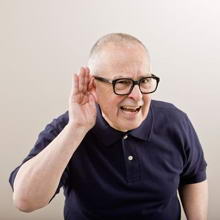
scientists-develop-new-method-for-hearing-loss-test.jpgA Purdue University researcher is working on a new technique to diagnose hearing loss in a way that more accurately reflects real-world situations.

“The traditional way to assess speech understanding in people with hearing loss is to put them in a quiet room and ask them to repeat words produced by one person they can’t see,” said Karen Iler Kirk, a professor of speech, language and hearing sciences.

“The goal of our research is to develop new tests that reflect more natural listening situations with visual cues, different background noises, voice quality, dialects and speaking rates. This is a more accurate way to predict how people perceive speech in the real world and, therefore, can help us determine appropriate therapy and interventions, such as cochlear implants.” Kirk explains.

“The better the diagnostic tool we have to make such decisions, the better we can serve our patients.”

Image above caption: Karen Iler Kirk, a Purdue professor of speech and hearing sciences (at right), and Carlos Colón, president of the Megagrooves LLC video production company, are getting ready to record Kim Chamberlain, a second-year audiology graduate student, for Kirk’s research project. She is working on a five-year study to develop a new technique to diagnose hearing loss in a way that more accurately reflects real-world situations.

Credit: Purdue News Service photo/David Umberger

Kirk received a $2.8 million grant from the National Institute on Deafness and Other Communication Disorders for the five-year project to develop two new audiovisual and multi-talker sentence tests that expand upon the traditional spoken word recognition format that has been used since the 1950s. One test is for adults and the other for children. More than 1,000 people ages 4-65 will participate in the study.

“The traditional spoken word recognition format has been used to determine the need for some sensory aids, such as hearing aids, which are used to amplify sound,” Kirk said. “However, it is not the best method for assessing the benefits of other sensory aids, such as the more expensive cochlear implants.”

A cochlear implant is an electronic device that can provide a sense of sound to someone who is deaf or severely hard of hearing. The device, which is surgically implanted, picks up and processes sound that is converted into electric impulses that are sent to the auditory nerve. More than 100,000 people worldwide have received cochlear implants, and more health insurance companies are paying for the surgery and therapy, Kirk said.

This project also is expanding word lists from the traditional monosyllabic words to a greater range of words based on how often they are used and lexical density - the number of words phonetically similar to the target. For example, the word “cat” has a number of lexical neighbors such as “bat,” “cap,” “cut” and “scat.” A word like “banana” may be used frequently but has few words that sound similar.

The 10 diverse speakers, who are recording more than 6,000 sentences combined, will not be producing perfectly articulated speech.

“It’s important to use sentence materials that are produced by different speakers because in the real world, we do not listen to just one person,” Kirk said.

In addition to the auditory component, the materials will be presented in a visual format so listeners can see and hear the phrase.

“This is really important because hearing-impaired people often have great difficulty understanding speech if they are just listening. Seeing the face and following lip reading cues can help someone understand the intended message,” she said.

Participants will be tested in auditory-only, visual-only or auditory plus visual modalities. At the end of the project, DVDs containing the test, as well as instruction booklets, data-gathering forms and a manual for data interpretation, will be available to professionals.

Another benefit from this study will be the raw data generated.

“Just collecting information from 1,000 individuals and measuring how well they perform on these tests gives us tremendous information that is not available elsewhere,” Kirk said.

Source:Purdue University.

Post this story to:    Del.icio.us    Digg this    Newsvine    Nowpublic    Reddit


Comments are closed.

Latest Science News

  • Arctic Map, the Future Gold Rush
  • New Way to Fight Tropical Deforestation
  • Perchlorates Found on Mars “Neither Good Nor Bad for Life,” NASA Says
  • ID Theft Ring Steals Millions of Credit/Debit Numbers
  • Vaccines Approved for Flu Season
  • Famous Feline Powder Finds a Home?
  • Kansas Dog Plays Mommy to Tiger Cubs
  • Eat Eggs For Breakfast Lose More Weight, New Study Finds
  • Edouard Churning Into Texas
  • Phoenix Mission Extended, Water Confirmed on Mars
  • Cassini Confirms Liquid Lake on Saturn Moon Titan
  • Uncertain Future for Elephants in Thailand, Scientists Say
  • Cow Manure Could Generate Electricity for Millions
  • Water Discovered On the Moon, Not Entirely Vaporized, Scientists Say
  • Watermelon Secret Ingredients
  • Americans Challenged to Rethink Gas Savings
  • Government Seizes Pet Food from PETCO
  • NASA’s New Eye in the Sky to Watch Weather
  • Five States Report West Nile Virus Cases
  • Typhoon Fengshun Batters Philippines
  • Update: Salmonella Cases Rise, Probe Moves to Florida & Mexico
  • Phoenix Lander Unearths Hidden Ice on Mars, Vaporized Shortly
  • Math with Medicine to Treat Leukemia
  • Triple System of Super-Earths Detected From Chile
  • Update: Tomato-Linked Salmonella Cases Rise

ScienceMode © 2006-2008 - About us

Login